What to plan around
Blossom dates shift by several days each year, so keep the days in Seoul flexible. Buddha's Birthday, in late April or May, fills the temples with lanterns.
When is the best time to visit Korea?
The best times to visit Korea are spring, from April to May, and autumn, from October to early November, when days are mild, dry and clear. Winter is best for snow, hot springs and quiet temples, and summer is hot and humid, with a rainy season from late June to late July.
Korea has four distinct seasons, and each one changes what the country offers. The table gives typical conditions in Seoul; the south coast and Jeju run a few degrees warmer, and the mountains of Gangwon colder.
| Season | Months | Seoul weather | Best for |
|---|---|---|---|
| Spring | April to May | Mild and dry, highs of about 18 to 23°C | Cherry blossom, palaces, temple stays |
| Summer | June to August | Hot and humid, highs near 30°C, rainy season from late June | Jeju, the east coast, green tea fields |
| Autumn | September to November | Clear and crisp, highs of about 20°C in October | Foliage, hiking, food |
| Winter | December to February | Cold and dry, highs near 2 to 4°C | Snow, hot springs, skiing, quiet temples |
Cherry blossom moves north through the country over about two weeks, from Jeju in late March to Seoul in early April, and each city's bloom lasts roughly a week. April and May are mild, dry and green, and among the most comfortable months for walking the palaces or staying a night in a mountain temple.
Blossom dates shift by several days each year, so keep the days in Seoul flexible. Buddha's Birthday, in late April or May, fills the temples with lanterns.
Summer is hot and humid, and the rainy season, jangma, usually runs from late June to late July. It is the quietest season for international visitors and the best for Jeju, the east coast and the tea fields of the south. Typhoons can affect travel in August and September.
Plan mornings outdoors and afternoons inside: museums, ateliers, a Korean medicine clinic, a long lunch. A private car makes the heat and the showers far easier.
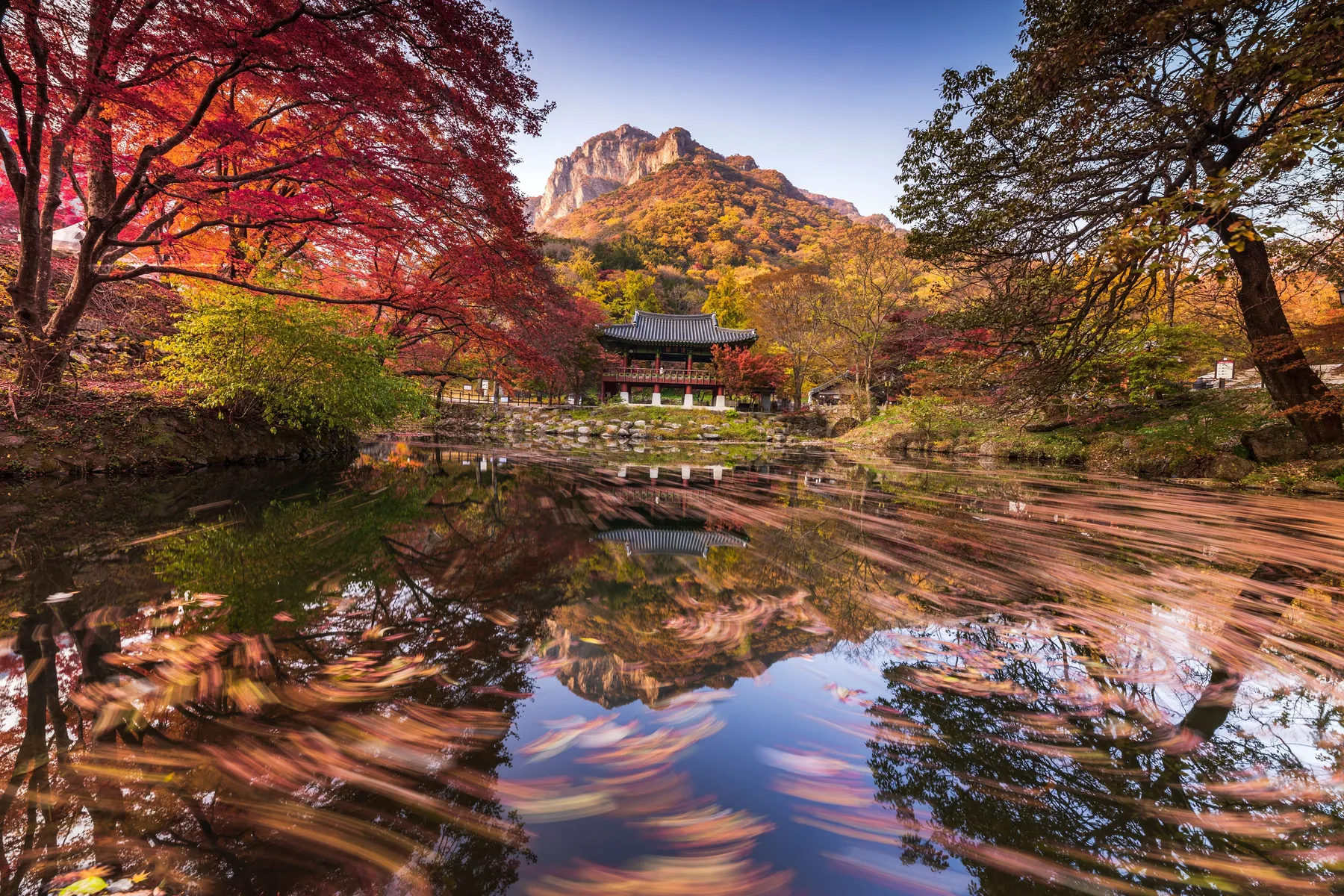
Autumn is the season most travelers love. Skies are clear, the air is dry, and the foliage moves south from the mountains of Gangwon in mid October to Seoul in late October and early November, and to the southern temples in early November. Our Autumn Foliage Retreat follows the color.
Chuseok, the harvest holiday, falls in September or early October. Trains sell out and many restaurants close for several days, so we plan around it.
Winter is cold, dry and bright. Seoul's first snow usually arrives around 20 November, the Gangwon ski resorts open from late November, and hot springs and temple stays are at their most atmospheric. See when it snows in Korea, our guide to Korea in December, and the Winter Retreat.
Seollal, the lunar new year, falls in late January or February and closes much of the country for three days. The week between Christmas and New Year is the busiest of the winter.
For wellness, any season works: hot springs and bathhouses in winter, temple stays in spring and autumn, the coast in summer. Our Wellness Retreat is planned around the month you travel, and you can see one shape it takes in a ten day wellness journey in Korea.
October is the most reliable month: clear skies, mild days of about 20°C in Seoul and autumn foliage across the country. April and May are the best alternative, with cherry blossom in early April and warm, dry weather.
Cherry blossom usually opens in Jeju in late March, in Busan and the south at the end of March, and in Seoul in early April. Each city's bloom lasts about a week, and dates shift by several days from year to year.
The rainy season, called jangma, usually runs from late June to late July. Rain comes in heavy bursts with dry spells between, and August stays hot and humid.
Foliage peaks in the mountains of Gangwon in mid to late October, in Seoul in late October and early November, and in the southern temples such as Naejangsan in early November.
Early December, late February to mid March, and June before the rains are the quietest periods. Avoid the Seollal and Chuseok holidays, when Koreans travel and many businesses close.
Seven to ten days is a comfortable first visit: four or five days in Seoul and the rest in one or two regions such as Gyeongju, Gangwon or Jeju.
Contact
Share as much or as little as you wish. A member of our team will reply personally, usually within a day.