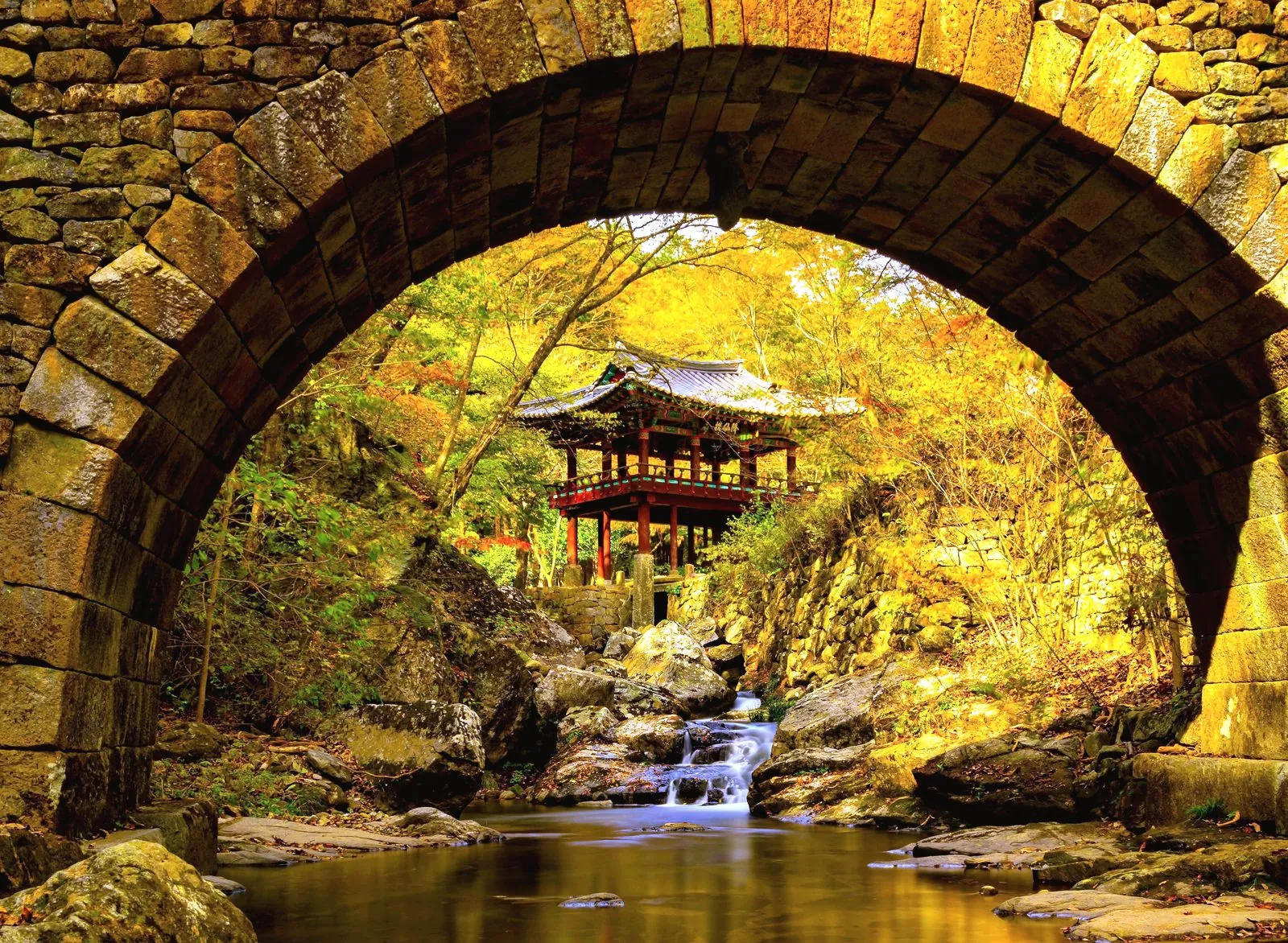
How do you plan ten days of wellness in Korea?
Ten days is enough to pair Seoul with a mountain temple stay, a hot spring region and either Gyeongju or Jeju at an unhurried pace. Build the journey on Korea's own rituals of rest: temple stays, Korean medicine, bathhouses, hot springs and temple food, with no more than one main experience a day.
Know what a wellness journey in Korea is
Korea has its own way of restoring, older than the spa. It rests on a few practices you will find nowhere else in the same form, and a good journey moves slowly between them.
Temple stay
A night or two in a working Buddhist temple in the mountains: an evening bell, a dawn chant, tea with a monastic and plant based meals. Some temples offer private rooms, and the schedule can be as full or as quiet as you wish.
Hanbang, Korean medicine
A consultation with a doctor of Korean medicine, who reads your pulse and constitution and may suggest acupuncture, herbal preparations or moxibustion. It is licensed medical practice in Korea, with clinics that see international guests.
Bathhouses and hot springs
The jjimjilbang is Korea's bathhouse: hot and cold pools, heated rooms of jade, salt or clay, and a scrub if you want one. Natural hot springs rise across the country, and the best are in the mountains.
Sound, tea and temple food
A sound bath played live on the geomungo, tea poured by a master, and sachal eumsik, the vegan cuisine of the temples. See our Korean temple food journey.
Follow a sample ten days
Every IEUM journey is written for the guest, so treat this as one shape it can take. The pace is deliberate: no more than one main experience a day, and two nights in each place outside Seoul.
A ten day wellness journey
| Days | Where | What |
|---|
| 1 | Seoul | Arrive, private transfer, an evening kept free to rest |
|---|
| 2 | Seoul | A palace morning, then a Korean medicine consultation |
|---|
| 3 | Seoul | A sound bath on the geomungo, tea, and a bathhouse in the evening |
|---|
| 4 to 5 | Gangwon | A temple stay in the mountains: forest walk, dawn chant, temple food |
|---|
| 6 | Gangwon | A hot spring stay near Seoraksan and the east coast |
|---|
| 7 to 8 | Gyeongju | The old Silla capital at walking pace: tombs, Bulguksa, a hanok stay |
|---|
| 9 | Seoul | A facial or head spa, and wellness shopping with a coach |
|---|
| 10 | Seoul | A slow morning, a last lunch, departure |
|---|
With fewer days, keep Seoul and the temple stay. With more, add Jeju for the coast and the forest trails of Hallasan. Our Wellness Retreat shows the experiences in detail.
Pick the season
A wellness journey works all year. Hot springs and bathhouses are at their best in winter, temple stays in spring and autumn, and the coast in summer. See the best season to visit Korea.
Travel it privately
Much of this Korea is booked in Korean and by introduction. We arrange each element in advance, with a private driver and an interpreter beside you, dietary needs confirmed with each kitchen, and someone reachable in Korea at every hour.
Ask the common questions
Is ten days enough for a wellness trip to Korea?
Yes. Ten days allows four days in Seoul, a two night temple stay in the mountains, a hot spring stay and two nights in Gyeongju or Jeju, at a pace that leaves time to rest.
What is a temple stay in Korea like?
You stay one or two nights in a working Buddhist temple, usually in the mountains. A typical day includes an evening bell ceremony, a dawn chant, meditation, tea with a monastic and plant based meals. Rooms are simple, and some temples offer private rooms.
What is hanbang?
Hanbang is traditional Korean medicine. A licensed doctor of Korean medicine assesses your constitution through pulse and questions, and may recommend acupuncture, herbal preparations or moxibustion. Many clinics in Seoul receive international guests.
What is the best season for a wellness trip to Korea?
Every season suits a different kind of rest. Winter is best for hot springs and bathhouses, spring and autumn for temple stays and walking, and summer for the coast and Jeju.
Can vegans and vegetarians do a wellness journey in Korea?
Yes. Temple food is entirely plant based, and IEUM Concierge confirms dietary needs with each kitchen in advance. Everyday Korean food often uses fish sauce and anchovy broth, so planning ahead matters.
Do I need to speak Korean?
No. IEUM Concierge arranges an interpreter and a private driver, and briefs each temple, clinic and kitchen in Korean before you arrive.